
Essay · Poverty and mental health
Bandwidth: What Poverty Does to the Mind, and What Our Words Do to It
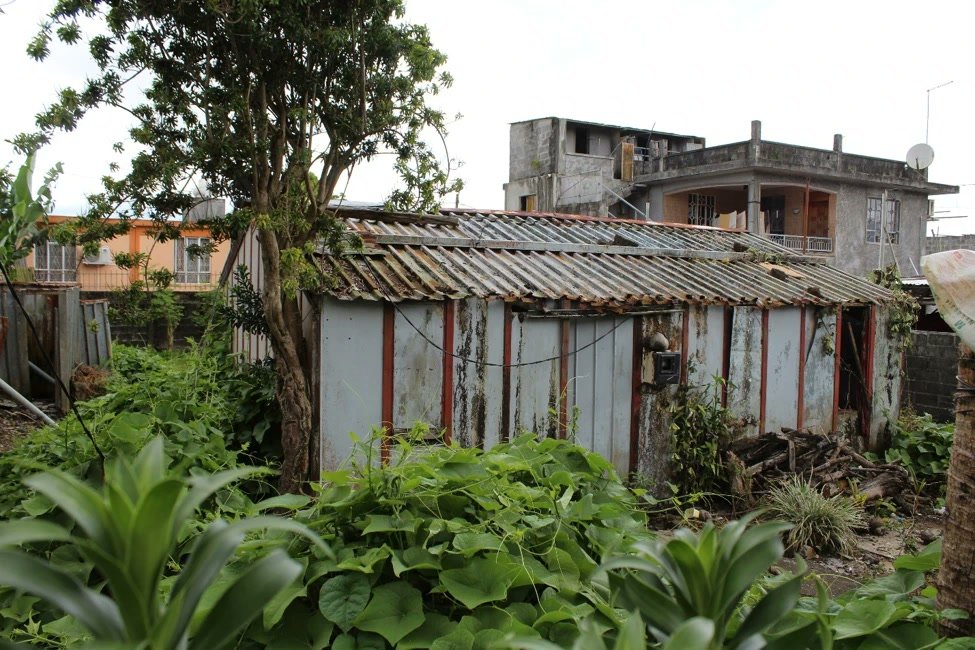
New shopping centres and busy streets give Rose-Belle the look of a prosperous town. Behind that look, many individuals and families in the heart of this community live with difficulties a passer-by rarely sees. Those difficulties are the subject here: what poverty does to the mind, and what our words do to it.
Content note. This article discusses mental illness and suicide. If you are struggling, Befrienders Mauritius will listen, free and in confidence, on 800 9393, every day from 9:00 to 21:00.
Section 1What we mean by poverty
Poverty exists when people lack the means to meet their basic needs. It is linked with poor health and low levels of education. In public talk it is also linked, far less fairly, with an unwillingness to work, disruptive behaviour and recklessness, and those judgements are part of what this article sets out to question.
In my opinion, poverty is one of the worst misfortunes a person can live through. It humiliates and it degrades. For many people living in it, the central task of each day is getting through it, and survival leaves little room to think further ahead. Society too often treats them as a burden and speaks of them with contempt.
Money worries touch almost every adult. In the American Psychological Association’s 2023 survey, money (63%) and the economy (64%) were among the most common sources of stress.1 For people living in poverty the same worries weigh far more heavily, and the evidence now points to poverty itself as a cause of depression and anxiety.2
Section 2Poverty and mental health
Our mental health is shaped by the social, environmental and economic conditions in which we are born, grow, work and age.3 The inequalities show early and widen with time. In a Glasgow cohort study, teachers rated 7.3% of 4-year-olds in the most deprived areas as having “abnormal” social, behavioural and emotional difficulties, against 4.1% in the least deprived areas. By age 7 the gap had grown to 14.7% against 3.6%.4 Parental ratings across Scotland show a similar gradient.3
Figure 1. The gap widens in the first years of school
Children rated by teachers as having “abnormal” social, behavioural and emotional difficulties, Glasgow, %
Show the data as a table
| Area | Age 4 | Age 7 |
|---|---|---|
| Most deprived | 7.3% | 14.7% |
| Least deprived | 4.1% | 3.6% |
Section 3The picture in Mauritius
Mauritian figures show how much mental illness the health system already treats. The Health Statistics Report 20245 records 111 suicide deaths in 2024 (95 men and 16 women), a rate of 9.1 per 100,000, and 402 people treated after attempted suicide, 42% of them women. Brown Sequard Psychiatric Hospital treated 2,946 in-patients, most often for schizophrenia (25.2%), multiple drug and psychoactive substance use (19.0%), depressive episode (9.7%) and bipolar disorder (7.9%). General hospitals discharged 4,140 patients for mental and behavioural disorders (3.2% of all discharges), Rodrigues recorded 597 such discharges, and mental and behavioural disorders were the underlying cause of 238 deaths nationally.
Figure 2. Why people were admitted to Brown Sequard
Most common diagnoses among 2,946 in-patients, 2024, % of in-patients
What these figures cannot show is how far poverty plays a part, because national health statistics are not broken down by income. The question has been asked before. A Mauritius Research Council case-control study of suicide attempts found that unemployed people were about twice as likely to attempt suicide, and that 38% of those who attempted reported financial problems, against 19% of a comparison group.6 That study is now twenty years old. Reading mental health data alongside income again would let policies and services follow the evidence.
Figure 3. Money problems among people who attempted suicide in Mauritius
Share reporting financial problems, %
If this touches you. Befrienders Mauritius offers a free, confidential listening line on 800 9393, every day from 9:00 to 21:00, in English and French. In an emergency, call 114.
Section 4How poverty reaches the mind
Childhood adversity is one route. Adverse childhood experiences, such as abuse or household dysfunction, are fairly common: in a Scottish study of children born in 2004 and 2005, about two-thirds had experienced at least one by age 8. They are far more common in low-income homes. Only 1% of children in the highest-income households had four or more, compared with 10.8% in the lowest-income households.3, 7 Four or more matters, because that number carries a considerably higher risk of mental ill-health, problematic alcohol use and drug misuse in adulthood.8
Figure 4. Four or more adverse childhood experiences by age 8
Each square is one child in a hundred, Scottish children born in 2004–2005
Highest-income households
1 child in 100
Lowest-income households
About 11 children in 100 (10.8%)
Poverty also works as a cycle, a self-perpetuating pattern in which families find it hard to leave poverty once they are in it. Economic, social and psychological barriers combine and can hold people there across generations. Poverty and mental illness feed each other in the same way, especially in low- and middle-income countries.9 Ridley and colleagues explain:
“Poverty itself can influence cognitive function by capturing attention and taxing mental bandwidth. Mental illness may have similar effects, by capturing attention, causing excessive rumination, and distorting people’s memories and beliefs about their abilities. Such cognitive impacts could alter a range of economic decisions and outcomes, from finding jobs to saving to education…”
Ridley, Rao, Schilbach and Patel (2020), p. 52
Put simply, a mind occupied by poverty has less room for the very tasks that could lead out of it. Finding a job gets harder, and the jobs on offer may themselves worsen mental ill-health.10 Worsening mental illness then makes a stable income harder to earn,9 and an unstable income brings housing insecurity, which feeds back into mental health.11
Figure 5. How poverty and mental ill-health feed each other
Each step makes the next more likely
Psychologists can help break this cycle if they are trained to address the social determinants of mental health with cultural humility and community-based research.12 Cultural humility is the part I would stress. The first mistake in supporting the mental wellbeing of people in poverty is to assume we understand a reality we have never lived. We should also stop importing Western interventions wholesale, draw on research from African countries, and adapt our approaches to the Mauritian context.
Section 5The reality of living in poverty
One part of this lived experience deserves particular attention: stigma and discrimination based on poverty. Knifton and Inglis describe stigma as a fundamental cause of health inequalities, linked with poorer mental health among low-income groups. People in deprived areas can also face “spatial” stigma, where the neighbourhood itself carries a bad name, and media reporting can make this worse without meaning to.3 How we talk about poverty is never neutral.
How we talk about poverty is never neutral.
Section 6A day in Tina’s life
Figures describe patterns. To see what those patterns feel like, we follow one mother through a day, because in many of these households the mother holds the family together, often as the only earner and the only parent. Tina, her children and her neighbour Rosie are fictional. Their day is a composite built from common patterns and describes no real person or family.
Tina wakes at 5 a.m. to empty the buckets that filled overnight under the leaking roof of the single bedroom she shares with her two children, aged 6 and 8. Then she walks to her neighbour Rosie’s house to fetch water so she can wash and bathe the children. Rosie lives in hard poverty too, and she never hesitates to help.
Everything Tina does this morning serves one purpose: meeting her family’s needs.
Figure 6. Maslow’s hierarchy of needs, and its limits
Tina’s morning is spent almost entirely on the bottom two tiers
fulfilment
Breakfast is tea without milk or sugar, with small pieces of stale bread soaked in it. Bread in tea is a familiar Mauritian habit; in this house it is the only breakfast there is.
The children leave for school. One wears a uniform that is too big, passed on as a donation; the other’s is worn thin. Their shoes are still wet from yesterday’s rain, so they go in sandals, and at school they put up with rude remarks from classmates because of it.
The rain tells two stories.


A night like that is a night without rest, and a tired mind has even less bandwidth the next day.
10 a.m.Tina starts work cleaning a private household. She works hard to prove she deserves her pay, and hears constant remarks about how lazy she is.
Tina had little chance to study, because she started working young to help her family. Now she is limited to small, low-paid jobs. Nobody trusts her enough to train her or move her into a better-paid role. Without opportunity she cannot gain experience, and without experience she is offered no opportunity.
Her situation is common in what we might call the hidden labour force: unstable jobs, casual work and work paid under the table, where people live on an uncertain income, often without workers’ rights or social protection.
This is bandwidth in practice. Tina’s mind is already full, and a full mind has little room left for planning ahead.
6 p.m.At 6 p.m. the children eat dinner, but homework will have to wait. The room is crowded and noisy, several people share one bedroom, and there is no corner set aside for study. By evening the family turns to the television, their phones and a game of cards with the neighbours.
“If they can afford a television, how can they possibly be poor? This is all just drama!”A passer-by
Poverty is not always visible from the street. What the passer-by misses is what happens behind those walls: overcrowding, no privacy, and compromises made every day. The television may be the family’s one escape, the phone their only window onto the world outside, and the card game one of the few moments of joy in a hard life. Someone already carrying that weight should not be denied an evening’s happiness as well.
Section 7What our words do
Empathy matters here. The American Psychological Association defines it as understanding a person from their frame of reference rather than our own, or vicariously experiencing their feelings, perceptions and thoughts.16 From the outside, Tina’s evening may look careless and her work history may look like a lack of effort. From where she stands, they are the choices of someone with a full mind and few options. The words we use, “lazy”, “burden”, “they should just…”, reach the people they describe and shape how those people see themselves. Poverty already wears down their spirit, and our words push their self-esteem lower still.
We also need to understand what lies underneath: the cycle of poverty, passed from one generation to the next. Easing the stress of poverty across generations needs initiatives at several levels at once, and the payoff for families and communities over generations makes that investment imperative.17
Tina will be up at 5 a.m. again tomorrow, emptying the same buckets. Most of her day is beyond our reach. How we speak about her, at work, at the school gate and in the press, is the one part we can change.
Questions and answers
Does poverty cause depression and anxiety?
The evidence now points that way. A 2020 review in Science by Ridley and colleagues found causal evidence that poverty increases depression and anxiety, and that mental illness in turn deepens poverty.
What is “mental bandwidth”?
It is the attention and mental capacity a person has available. Money worries capture attention and tax that capacity, leaving less room for planning, job-seeking or saving: the very tasks that could lead out of poverty.
Is there data on poverty and mental health in Mauritius?
Not recent data. National health statistics are not broken down by income. A 2005 Mauritius Research Council study found that 38% of people who attempted suicide reported financial problems, against 19% of a comparison group.
Where can someone in Mauritius find emotional support?
Befrienders Mauritius runs a free, confidential listening line on 800 9393, every day from 9:00 to 21:00. In an emergency, call 114.
How to cite this article
Hurree, H. (2026, November 15). Bandwidth: What poverty does to the mind, and what our words do to it. Atelier Sa Nou Vize. https://sanouvize.org/bandwidth-poverty-mental-health/
References
- American Psychological Association. (2023, November 1). Stress in America 2023: A nation recovering from collective trauma [Press release]. apa.org
- Ridley, M., Rao, G., Schilbach, F., & Patel, V. (2020). Poverty, depression, and anxiety: Causal evidence and mechanisms. Science, 370(6522), eaay0214. doi.org/10.1126/science.aay0214
- Knifton, L., & Inglis, G. (2020). Poverty and mental health: Policy, practice and research implications. BJPsych Bulletin, 44(5), 193–196. PMC7525587
- Marryat, L., Thompson, L., Minnis, H., & Wilson, P. (2018). Primary schools and the amplification of social differences in child mental health: A population-based cohort study. Journal of Epidemiology and Community Health, 72, 27–33.
- Ministry of Health and Wellness, Health Statistics Unit. (2025). Health statistics report 2024: Island of Mauritius. Government of Mauritius.
- Ameerbeg, S. A. G. (2005). Risk and protective factors associated with suicide in Mauritius: Case-control study (Final report). Mauritius Research Council. repository.mu
- Marryat, L., & Frank, J. (2019). Factors associated with adverse childhood experiences in Scottish children: A prospective cohort study. BMJ Paediatrics Open, 3(1), e000340.
- Hughes, K., Bellis, M. A., Hardcastle, K. A., Sethi, D., Butchart, A., Mikton, C., et al. (2017). The effect of multiple adverse childhood experiences on health: A systematic review and meta-analysis. Lancet Public Health, 2, e356–e366.
- Lund, C., De Silva, M., Plagerson, S., Cooper, S., Chisholm, D., Das, J., Knapp, M., & Patel, V. (2011). Poverty and mental disorders: Breaking the cycle in low-income and middle-income countries. The Lancet, 378(9801), 1502–1514. doi.org/10.1016/S0140-6736(11)60754-X
- Allan, B. A., Kim, T., & Shein, B. (2022). Underemployment and mental health: A longitudinal study. Journal of Counseling Psychology, 69(5), 578–588. doi.org/10.1037/cou0000610
- Marbin, D., Gutwinski, S., Schreiter, S., & Heinz, A. (2022). Perspectives in poverty and mental health. Frontiers in Public Health, 10. doi.org/10.3389/fpubh.2022.975482
- Woods-Jaeger, B., Cho, B., & Briggs, E. C. (2024). Training psychologists to address social determinants of mental health. Training and Education in Professional Psychology, 18(1), 31–41. doi.org/10.1037/tep0000307
- Piff, P. K., Kraus, M. W., Côté, S., Cheng, B. H., & Keltner, D. (2010). Having less, giving more: The influence of social class on prosocial behavior. Journal of Personality and Social Psychology, 99(5), 771–784.
- Tay, L., & Diener, E. (2011). Needs and subjective well-being around the world. Journal of Personality and Social Psychology, 101(2), 354–365.
- Fell, B., & Hewstone, M. (2015). Psychological perspectives on poverty. Joseph Rowntree Foundation. jrf.org.uk
- American Psychological Association. (n.d.). Empathy. In APA dictionary of psychology. Retrieved November 15, 2026, from dictionary.apa.org/empathy
- van Zyl, L. E. (2023, November 23). The three faces of poverty-related stress. Psychology Today. psychologytoday.com
About Atelier Sa Nou Vize. A neighbourhood NGO working in Rose-Belle for more than fifteen years, running free daycare and after-school tuition, youth activities and home repairs. Accredited by the National Social Inclusion Foundation since 2017 (registration NCSRF/2017/0178).